Menü
- Funktionsweise
- Partner
- Unterstützung
- Blog
- Über uns
- Kontaktiere uns
Sprache ändern:
Transaktions-ID
Tauschverfolgung
Tips
14. April 2025
The Ultimate Guide to Non-Custodial Crypto Exchanges: Privacy, Security, and Full Control
Inhalt
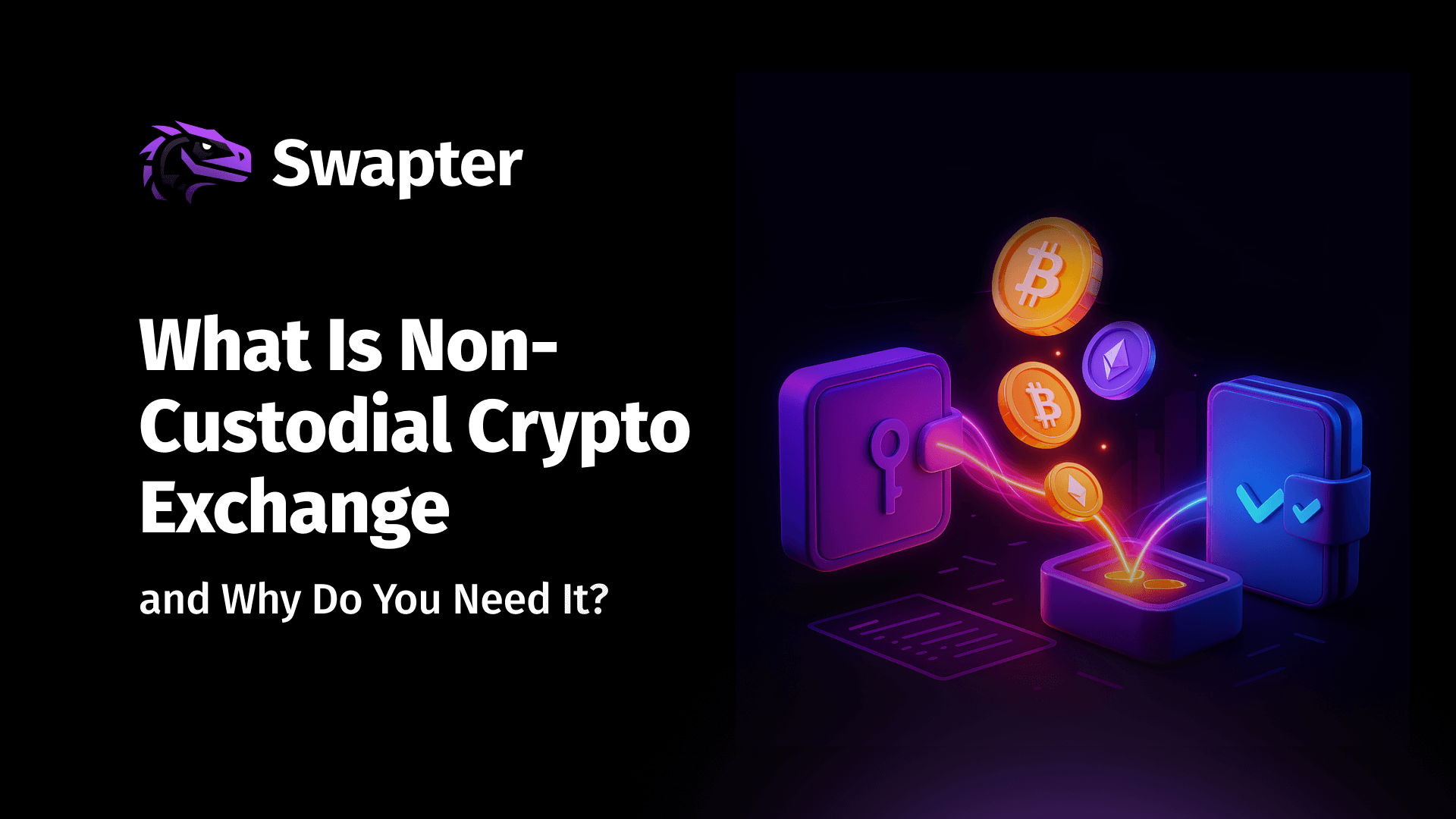
In the rapidly evolving world of cryptocurrency, traders and investors are increasingly seeking alternatives to traditional centralized exchanges. Non-custodial crypto exchanges have emerged as a revolutionary solution, offering users unprecedented control over their digital assets while maintaining privacy and security. Unlike traditional exchanges where you must trust a third party with your funds, non-custodial exchanges allow you to retain full ownership of your private keys and cryptocurrencies throughout the trading process.
This comprehensive guide will explore everything you need to know about non-custodial exchanges, from their fundamental workings to advanced features, helping you make informed decisions about your crypto trading strategy.
What is a Non-Custodial Crypto Exchange?
A non-custodial crypto exchange is a trading platform that enables users to trade cryptocurrencies directly from their personal wallets without transferring custody of their funds to the exchange. In this model, users maintain complete control over their private keys and assets throughout the entire trading process.
Key characteristics of non-custodial exchanges include:
- Direct wallet-to-wallet trading: Transactions occur directly between users’ wallets
- No deposit requirements: Users don’t need to deposit funds to the exchange
- Private key control: Users retain full ownership of their private keys
- Decentralized architecture: Most operate on blockchain networks without central servers
- Enhanced privacy: Minimal personal information requirements for trading
History and Evolution of Crypto Exchanges
The cryptocurrency exchange landscape has undergone significant transformation since Bitcoin’s inception:
Early Centralized Era (2010-2016)
- First exchanges like Mt. Gox established the centralized model
- Users deposited funds to exchange wallets for trading
- High-profile hacks and failures highlighted custodial risks
Emergence of DEXs (2017-2020)
- Ethereum’s smart contract capabilities enabled decentralized exchanges
- Protocols like Uniswap and SushiSwap pioneered automated market making
- Introduction of liquidity pools and yield farming concepts
Modern Non-Custodial Solutions (2021-Present)
- Advanced cross-chain compatibility
- Improved user interfaces and experience
- Integration of DeFi protocols and advanced trading features
- Enhanced security measures and privacy protections
How Does a Non-Custodial Crypto Exchange Differ from Traditional Exchanges?
Understanding the fundamental differences between custodial and non-custodial exchanges is crucial for making informed trading decisions:
Custody Model
Traditional Exchanges: Users deposit funds to exchange-controlled wallets, giving up custody temporarily.Non-Custodial Exchanges: Users maintain control of their funds in personal wallets throughout the process.
Security Responsibility
Traditional Exchanges: Exchange is responsible for securing user funds and implementing security measures.Non-Custodial Exchanges: Users are responsible for wallet security and private key management.
Regulatory Compliance
Traditional Exchanges: Must comply with KYC/AML regulations and government oversight.Non-Custodial Exchanges: Typically require minimal personal information and operate with greater regulatory flexibility.
Trading Experience
Traditional Exchanges: Instant order execution and advanced trading features like margin trading.Non-Custodial Exchanges: Transaction speed depends on blockchain confirmation times, with growing feature sophistication.
Which Features Make a Non-Custodial Exchange the Best?
When evaluating non-custodial exchanges, consider these essential features:
Security Features
- Multi-signature wallet support
- Smart contract audits and transparency
- Decentralized governance mechanisms
- Bug bounty programs and continuous security monitoring
User Experience
- Intuitive interface design
- Mobile compatibility and responsive design
- Multi-language support
- Comprehensive educational resources
Technical Capabilities
- Cross-chain compatibility and bridge integrations
- Advanced order types (limit, stop-loss, market orders)
- Liquidity aggregation from multiple sources
- API access for algorithmic trading
Trading Options
- Wide variety of supported cryptocurrencies
- Competitive trading fees and transparent fee structure
- High liquidity and minimal slippage
- Integration with popular DeFi protocols
How Non-Custodial Exchanges Work
Non-custodial exchanges operate through several innovative mechanisms:
Smart Contract Architecture
Smart contracts act as automated intermediaries, executing trades when predetermined conditions are met. These contracts are typically open-source and auditable, providing transparency and security.
Order Book vs. Automated Market Maker (AMM)
- Order Book Model: Traditional buy/sell orders matched between users
- AMM Model: Liquidity pools enable instant swaps based on mathematical formulas
Cross-Chain Functionality
Modern non-custodial exchanges support trading across different blockchain networks through:
- Atomic swaps for direct cross-chain trading
- Bridge protocols for asset transfers between networks
- Wrapped tokens representing assets from other blockchains
Liquidity Provision
Users can become liquidity providers by depositing token pairs into liquidity pools, earning fees from trades and often additional rewards through yield farming programs.
Key Features
Wallet Integration
Non-custodial exchanges integrate with popular cryptocurrency wallets:
- MetaMask: Most common Ethereum-based wallet integration
- WalletConnect: Protocol enabling connection with various mobile wallets
- Hardware Wallets: Support for Ledger, Trezor, and other cold storage solutions
- Multi-chain Wallets: Integration with wallets supporting multiple blockchain networks
Privacy Protection
- No mandatory KYC requirements for basic trading
- Minimal data collection and storage
- Anonymous trading capabilities
- Privacy-focused blockchain integrations
Decentralized Governance
Many exchanges implement decentralized autonomous organization (DAO) structures:
- Token-based voting rights for protocol changes
- Community-driven development decisions
- Transparent proposal and implementation processes
Advantages
Complete Asset Control
Users maintain full ownership and control over their cryptocurrencies, eliminating counterparty risk associated with centralized exchanges.
Enhanced Privacy
Minimal personal information requirements and anonymous trading capabilities protect user privacy and financial data.
Reduced Hacking Risk
Since funds remain in users’ personal wallets, they’re not vulnerable to large-scale exchange hacks that have plagued the industry.
Global Accessibility
Non-custodial exchanges typically have fewer geographic restrictions, providing access to users in regions where centralized exchanges may be blocked.
Innovation and Flexibility
Decentralized protocols can implement new features and improvements more rapidly through community governance.
Lower Fees
Many non-custodial exchanges offer competitive fees due to reduced operational overhead and infrastructure costs.
Risks and Limitations
Technical Complexity
Users must understand wallet management, private key security, and blockchain transactions, which can be challenging for beginners.
Limited Customer Support
Decentralized nature means traditional customer service may be unavailable, requiring users to rely on community support and documentation.
Smart Contract Risks
Bugs or vulnerabilities in smart contracts could lead to loss of funds, despite auditing processes.
Liquidity Constraints
Some trading pairs may have limited liquidity, resulting in higher slippage and less favorable prices.
Regulatory Uncertainty
Evolving regulatory landscape may impact the availability and features of non-custodial exchanges in certain jurisdictions.
User Error Risk
Irreversible nature of blockchain transactions means mistakes in addresses or transaction parameters can result in permanent loss.
Types of Non-Custodial Exchanges
Decentralized Exchanges (DEX)
Pure DEXs operate entirely on blockchain networks without any centralized components:
- Examples: Uniswap, SushiSwap, PancakeSwap
- Characteristics: Fully decentralized, automated market makers, high transparency
Exchange Aggregators
These platforms combine liquidity from multiple sources to provide better prices:
- Examples: 1inch, Matcha, ParaSwap
- Benefits: Optimal pricing, reduced slippage, single interface for multiple DEXs
Atomic Swap Solutions
Enable direct peer-to-peer trading across different blockchain networks:
- Examples: AtomicDEX, Komodo Platform
- Features: True cross-chain trading, no wrapped tokens required
Hybrid Solutions
Combine benefits of centralized and decentralized approaches:
- Examples: dYdX, Loopring
- Features: Advanced trading features with non-custodial security
Best Platform
Selecting the best non-custodial exchange depends on your specific needs and priorities:
For Beginners
- Uniswap: User-friendly interface, extensive token support, strong community
- 1inch: Excellent for getting best prices through aggregation
- MetaMask Swaps: Integrated directly into popular wallet interface
For Advanced Traders
- dYdX: Advanced features like margin trading and perpetuals
- Loopring: High-speed trading with low fees through layer 2 scaling
- SushiSwap: Comprehensive DeFi ecosystem with multiple features
For Cross-Chain Trading
- Thorchain: Native cross-chain capabilities without wrapped tokens
- Anyswap: Multi-chain bridge and exchange functionality
- Rango Exchange: Cross-chain aggregator supporting numerous blockchains
For Privacy-Focused Users
- Tornado Cash: (Note: Subject to regulatory restrictions in some jurisdictions)
- Secret Network DEXs: Privacy-preserving smart contracts
- Incognito: Anonymous cross-chain trading capabilities
Best Practices
Security Best Practices
- Use hardware wallets for significant amounts
- Verify contract addresses before interacting
- Start with small test transactions
- Keep software and wallets updated
- Use strong, unique passwords and enable 2FA where available
Trading Best Practices
- Research tokens thoroughly before trading
- Understand impermanent loss when providing liquidity
- Monitor gas fees and transaction costs
- Set appropriate slippage tolerance
- Use limit orders when available to avoid MEV attacks
Privacy Best Practices
- Use VPN services for additional privacy
- Consider using privacy-focused browsers
- Understand blockchain analytics and tracking methods
- Use multiple wallets for different purposes
- Be aware of timing analysis and transaction correlation
Trends and Innovations
Layer 2 Scaling Solutions
- Polygon, Arbitrum, and Optimism provide faster, cheaper transactions
- Zero-knowledge rollups enhance privacy and scalability
- State channels enable instant, low-cost microtransactions
Cross-Chain Interoperability
- Improved bridge security and user experience
- Native cross-chain protocols reducing wrapped token dependency
- Multi-chain wallet and interface standardization
DeFi Integration
- Yield farming and liquidity mining programs
- Integration with lending and borrowing protocols
- Synthetic assets and derivatives trading
- NFT marketplace integrations
Mobile and User Experience
- Improved mobile wallet integrations
- Simplified user interfaces for mainstream adoption
- Better transaction preview and confirmation processes
- Enhanced customer education and onboarding
Regulatory Environment
The regulatory landscape for non-custodial exchanges continues to evolve:
Current Regulatory Challenges
- Varying interpretations across jurisdictions
- Compliance requirements for protocol developers
- Sanctions and restrictions on certain protocols
- Tax reporting and compliance considerations
Future Regulatory Trends
- Increased focus on DeFi regulation
- Potential licensing requirements for DEX interfaces
- Enhanced reporting requirements for large transactions
- International coordination on regulatory frameworks
Compliance Considerations
- Geographic restrictions and VPN detection
- Optional KYC for enhanced features
- Transaction monitoring and suspicious activity reporting
- Integration with traditional financial systems
Conclusion
Non-custodial crypto exchanges represent a paradigm shift toward user sovereignty and financial freedom in the cryptocurrency ecosystem. While they offer unprecedented control, privacy, and security benefits, they also require users to take greater responsibility for their asset security and technical understanding.
As the technology continues to mature, we can expect improved user experiences, enhanced security measures, and broader adoption of non-custodial trading solutions. For users willing to learn and adapt, non-custodial exchanges offer a compelling alternative to traditional centralized platforms, aligning with the core principles of cryptocurrency: decentralization, privacy, and individual financial sovereignty.
The future of cryptocurrency trading is increasingly non-custodial, and understanding these platforms today positions you at the forefront of this financial revolution. Whether you’re a privacy-conscious trader, a DeFi enthusiast, or simply someone seeking greater control over your digital assets, non-custodial exchanges provide the tools and freedom to trade on your own terms.
Remember to start small, prioritize security, and continuously educate yourself as you explore the exciting world of non-custodial cryptocurrency trading

Für unseren Newsletter anmelden
Abonnieren Sie unseren Newsletter und bleiben Sie über die neuesten Entwicklungen informiert.

© 2026 Swapter
Alle Rechte vorbehalten